
The transistor, a small and seemingly simple component, is one of the main pillars of modern civilization. In this article, we explore the transistor history and function — from its invention to its role in powering modern electronics. In a world where fast communication, information processing, and precise control of processes have become vital necessities, the transistor is the magical key that has made all this possible.
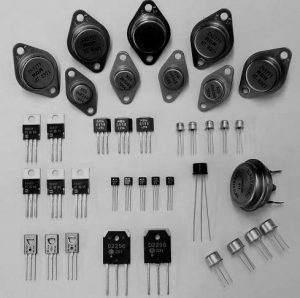
🌍 The World of the Transistor: From Foundation to Revolution
The transistor, a small and seemingly simple component, is one of the main pillars of modern civilization. In a world where fast communication, information processing, and precise control of processes have become vital necessities, the transistor is the magical key that has made all this possible. If we were to describe its importance, we could say it plays the same role in technology that the wheel does in mechanics — a foundational innovation that paved the way for all subsequent revolutions.
📜 Introduction and Historical Context
To understand the significance of the transistor, we must look back. Until the mid-20th century, electronic circuits were primarily built using vacuum tubes and mechanical relays. Vacuum tubes could amplify electrical signals, and relays enabled switching current paths. But both technologies struggled with serious limitations:
- Very high energy consumption and need for large power supplies
- Intense heat generation and difficulty in cooling
- Large size and heavy weight
- Short lifespan and frequent failures
- Heavy maintenance and operational costs
These drawbacks, especially after World War II when telecommunications and military industries were rapidly expanding, became a major obstacle. The world needed a small, low-power, and reliable electronic component. This necessity paved the way for extensive research into semiconductors — and ultimately, the birth of the transistor.
In December 1947, three scientists at Bell Labs — William Shockley, John Bardeen, and Walter Brattain — successfully built the first practical transistor. This invention was so revolutionary that only a few years later, they were awarded the Nobel Prize in Physics. From that moment, the era of vacuum tubes ended, and a new age in electronics began.
🔎 Definition and Nature of the Transistor
A transistor is a semiconductor electronic device capable of performing two core functions:
- Switching — rapidly turning electrical current on and off
- Amplifying — increasing the amplitude of a weak electrical signal
What distinguishes the transistor from other components is its exceptional ability to precisely control electrical current. It can amplify signals as weak as microvolts to levels sufficient to drive complex circuits. Simply put, a transistor acts like a smart water valve — a small handle can control a massive flow.
Physically, transistors operate based on the phenomenon of semiconductor junctions. Combining layers of P-type and N-type semiconductors creates a structure that can control whether current flows or not. This key property sparked a revolution in electronics.
⚡ A Three-Terminal Electronic Device
The transistor is generally based on three main terminals:
- Emitter — the layer that injects charge carriers (electrons or holes) into the circuit.
- Base — an extremely thin layer that acts like a gate, regulating the amount of current flow.
- Collector — the layer that collects the current injected from the emitter.
The base, despite consuming very little current, acts as the main commander. A weak input signal at the base can control a large current between the emitter and collector. This principle is the foundation of all amplifying and switching applications of the transistor.
Thus, the transistor is known as a “three-terminal device” — each terminal has a vital role, and removing or disrupting any one of them compromises overall functionality.
🚀 A Revolutionary Role in Shaping Modern Life
The emergence of the transistor can be considered a turning point in technological history. While many human inventions have been impactful, only a few have laid the foundation for an entirely new era. The transistor is one of those rare exceptions.
After the transistor’s introduction:
- Bulky vacuum tube radios gave way to lightweight, portable pocket radios.
- Computers that once filled entire rooms and consumed the power of several power plants gradually became smaller, faster, and cheaper.
- The telecommunications industry made a giant leap forward, forming global communication networks.
- The foundations of computer science and digital technology became truly feasible.
Today, billions of transistors are integrated into miniature chips. These chips are the thinking brains of devices that shape modern life — from smartphones and laptops to self-driving cars, satellites, and advanced medical equipment.
To put it more vividly: without the transistor, there would be no “Digital Age.” This tiny component is not just a technical tool — it’s an industrial and social revolution that has transformed the daily lives of billions of people.
📜 Historical Prelude: The Era of Vacuum Tubes and Mechanical Relays
To better understand the transistor’s importance, we must go back — to a time before semiconductors and microchips. In the early 20th century, two main technologies were recognized as the pillars of the electronic world: vacuum tubes and mechanical relays. These tools enabled major advancements like radio, telephone, television, and even the first computers — but their serious limitations made a technological revolution inevitable.
💡 Limitations of Vacuum Tubes
Vacuum tubes were components that used the movement of electrons in a vacuum between electrodes to enable signal amplification or current switching. In their time, they were revolutionary and formed the basis of inventions like home radios, international telephones, and early televisions. However, their inherent limitations caused major problems:
- High energy consumption: To operate, the internal filament had to be heated to high temperatures, resulting in massive power usage and intense heat generation.
- Short lifespan: Filaments burned out over time, requiring frequent replacement.
- Large size and weight: Complex circuits required hundreds or even thousands of tubes, making devices bulky and heavy.
- Frequent failures: Sensitivity to mechanical shock and thermal fluctuations meant tubes constantly failed.
Imagine the 1940s computer ENIAC, which used over 17,000 vacuum tubes that burned out daily — requiring round-the-clock maintenance by teams of engineers!
🚀? Ready to Go Beyond the Basics
You’ve just explored the introduction of one of humanity’s greatest inventions — the transistor. But what you’ve read is only a glimpse. The full version takes you deeper into the story of how this tiny device reshaped technology, science, and our everyday lives.
✨ Inside the complete article, you’ll discover:
– The fascinating science of semiconductors explained simply
– How transistors revolutionized computers, communication, and global industries
– Exclusive, well-structured insights you won’t find in free summaries
📘 This isn’t just an article — it’s your gateway to understanding the Digital Age.
For more in-depth information about transistors, check out this related article:
Fundamentals of Diodes and Transistors
.